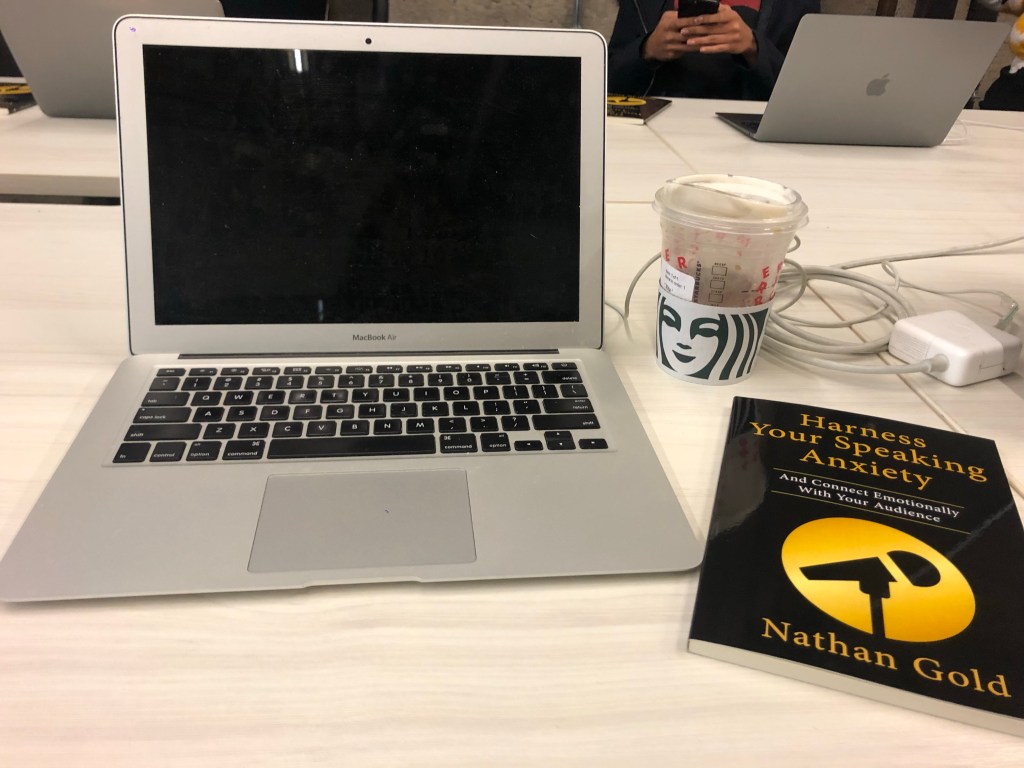
To guide us for our pitch at the end of the Hacker Exchange, we received a comprehensive pitch workshop from Nathan Gold. Nathan is a speech coach specialising in pitching as well as having experience working on TedTalks. Throughout this workshop, we were taught how to capture our audience, how to effectively deal with our nerves and how to answer questions. Nathan instructed us on 6 signals to convey to the audience to capture their attention. Firstly, tell the audience you will not waste your time, then convey that you know who your audience is, convey that you’re well organised, convey that you know you subject, highlight a single important point in your whole pitch and clearly convey when your are finished.
The magic framework that Nathan suggested for our pitch was to start with a hook; this can be a question, an astounding statistic, or using a simile, analogy or metaphor. This is then followed by Proof A; which answers the question of why and what is the identified problem. Then Proof B answering the question of how; how your product is a solution to the problem presented in Proof A. Then Proof C answering the question of what: what are the results of your solution, this is supported by your market validation, market research and finally you finish with the ask from the panel. Additionally, throughout your speech you want to establish credibility, by showing expertise and specialisation, trustworthiness, helpfulness and enthusiasm.
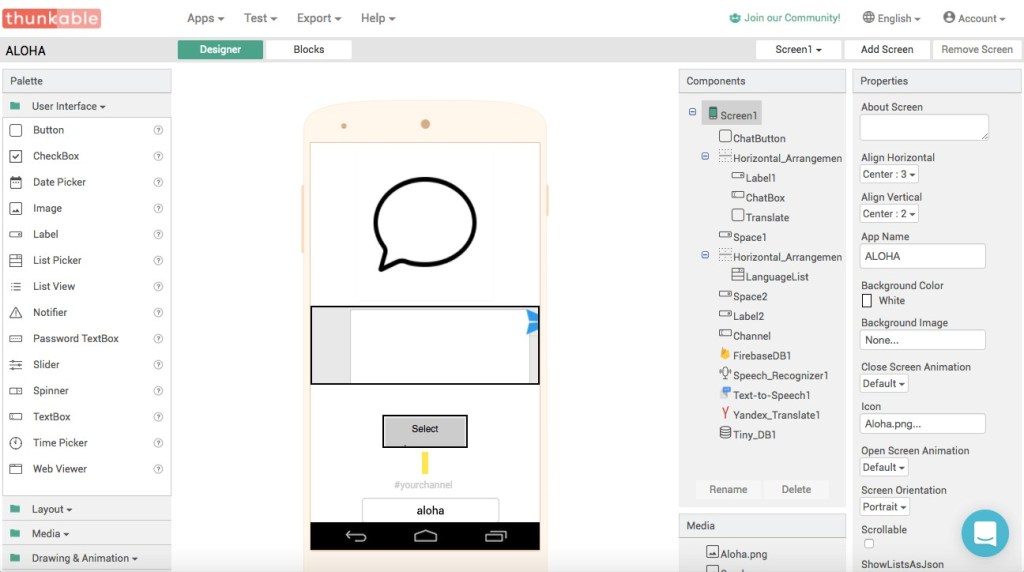
Another extremely useful tool for my start up was learning how to prototype for our business. During the second week, we visited the Thunkable office for a rapid prototyping workshop. Thunkable is a platform that helps make building apps easier. They were initially an app building platform that found that their platform was most used by non-technical users so pivoted to focus on helping non-technical users easily build an app for their startup. Through this workshop, it was extremely useful to help run through how a user interface needs to be designed in order to be user friendly.
To create my prototype, what I found really helpful was a workshop from Matthew Kwong on UI/UX design. Instead of writing the code for an app or a website, Matthew showed us how to use a UI/UX design application that allows you to design the appearance and logic of your application or website. My startup as is a centralised platform similar to a job search platform. I found that this kind of platform is mostly used on a desktop rather than as a mobile app. So I designed how I wanted my website to look like using Figma. Creating this prototype was a great way for me to clarify and develop my ideas for the startup. Through building the prototype this was really making me think about exactly my target audience, by clarifying what the colour scheme and theme of my website should be, the exact services provided etc. Both pitching and prototyping are essential
I found the workshops focused on pitching and prototyping extremely valuable. Not only were these extremely helpful for our final pitches for the course, pitching is also an essential part to piloting your start up as well as prototyping being a major part of building an optimised final product.
 The Hacker Exchange 1.8